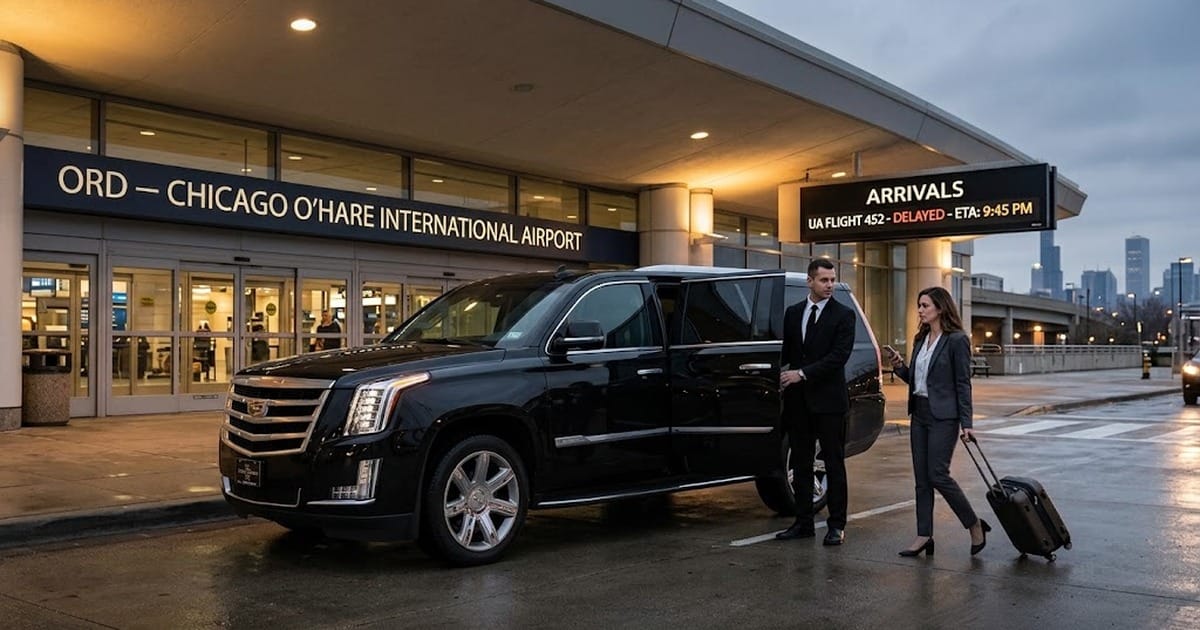
Surviving a Flight Delay at O’Hare
Anyone who flies through O’Hare regularly knows it’s only a matter of time before “on time” becomes “delayed.” Between Chicago’s notorious weather swings, O’Hare’s sheer volume of daily flights, and the ripple effects that hit connecting passengers the hardest, delays here aren’t rare — they’re practically part of the experience. Here’s what actually happens once your flight gets delayed, and how your ground transportation plan should adjust along with it.
Why O’Hare Delays Happen So Often
A few factors make O’Hare more delay-prone than a lot of other major airports:
Weather. Chicago winters bring snow and ice that can slow ground operations considerably, while summer thunderstorms cause their own share of delays and ground stops. Because O’Hare handles such a high volume of daily traffic, even a short weather disruption can create delays that take hours to fully clear.
Volume and connections. O’Hare is one of the busiest hubs in the country, which means a huge share of passengers are connecting rather than starting or ending their trip there. A delay on one incoming flight can cascade into delayed departures and missed connections throughout the day.
Air traffic congestion. With so many flights moving through a limited amount of runway and airspace capacity, congestion during peak hours can add delays even on a clear, calm day.
What Actually Happens When Your Flight Gets Delayed
The airline updates your estimated arrival time, though that estimate itself can shift more than once before you actually land. A “30-minute delay” in the morning can easily become a two-hour delay by the time you’re wheels-down.
Gate assignments can change. A delayed flight sometimes gets reassigned to a different gate or even a different terminal, which matters if anyone is trying to time a pickup around your original arrival details.
Baggage claim timing shifts too. A later arrival generally means a later bag claim, and delays can sometimes affect how quickly bags actually make it to the carousel once you’ve landed.
Why This Is a Problem for Same-Day Rideshare
If you booked a rideshare for your original arrival time, or planned to book one after landing, a delay creates a few compounding problems:
Your driver has no way to know your flight status changed. A rideshare driver arriving for your original scheduled time has no visibility into your actual, updated arrival — they’re simply working off whatever time was in the app.
Booking after landing means competing with everyone else on delayed flights. If your flight was delayed, there’s a good chance several other flights around yours were affected too, all dumping delayed passengers into the rideshare queue at the same time, which can mean longer wait times and higher surge pricing right when you’re already tired and ready to get home.
Late-night delays hit availability hardest. A flight that was supposed to land at 7 p.m. but actually arrives at 11 p.m. is landing during a much thinner pool of available drivers, which can mean a longer wait than you’d expect at that hour.
How a Pre-Booked Ride Handles This Differently
Flight tracking adjusts your pickup automatically. A pre-booked car service tracks your actual flight in real time, not just your originally scheduled time, so a two-hour delay simply shifts your pickup window without you needing to do anything.
Your driver is still there when you land, regardless of the delay. Since the service is already tracking your flight, there’s no risk of your reservation “expiring” or your driver leaving because your original scheduled time passed.
You’re not competing with a surge of other delayed passengers for a ride. Your car is reserved specifically for you, so O’Hare’s delay-driven rideshare crunch simply doesn’t factor into your wait.
What to Do If Your Flight Gets Delayed
Notify your car service if the delay is significant, even though most flight-tracking services will already have picked it up automatically — a quick message confirms everything’s adjusted correctly on both ends.
Double check your gate and terminal, since a delay sometimes comes with a gate or terminal change that’s worth confirming before you start walking toward pickup.
Give yourself a little buffer after landing, since bag claim timing can shift along with everything else, and a scheduled pickup will simply wait for you rather than starting a clock the moment your flight lands.
Why This Matters More at O’Hare Specifically
Given how often delays happen here, treating your ground transportation as an afterthought is a bigger risk at O’Hare than it might be at a smaller, less delay-prone airport. Anyone flying through regularly benefits from a Chicago Limo Service built around real-time flight tracking, simply because the odds of needing that flexibility on any given trip are meaningfully higher here than average.
For Trips Where Reliability Really Counts
For business travel, connecting through O’Hare on a tight schedule, or any trip where you can’t afford ground transportation uncertainty on top of flight uncertainty, booking a Chicago black car service ahead of time removes one major variable from an already unpredictable travel day — a driver who’s already adjusting to your actual arrival time, rather than your original one.
Final Thoughts
Flight delays at O’Hare aren’t a matter of if, they’re a matter of when, and treating your ground transportation plan with that reality in mind makes a real difference. A pre-booked ride with flight tracking absorbs the delay automatically, while a same-day rideshare plan leaves you exposed to exactly the kind of last-minute scramble a delay tends to create. The flight itself might be out of your control — but how smoothly the rest of your trip goes afterward doesn’t have to be.