Game Day in Chicago: A Fan’s Guide to Getting to the Games
Chicago sports fans know the feeling: you’ve got tickets, you’ve got the right jersey on, and then reality sets in. How exactly are you getting there, and how bad is it going to be getting home?
Between the Bulls and Blackhawks at United Center, the Cubs at Wrigley Field, and the Bears at Soldier Field, Chicago hosts a packed sports calendar spread across three very different neighborhoods, each with its own parking headaches, traffic patterns, and post-game bottlenecks. This guide breaks down what to actually expect at each venue and how to plan a game day that doesn’t start or end with you stuck in traffic.
United Center: Near West Side
United Center sits on Madison Street on the Near West Side, and the traffic story here is mostly about the expressways feeding into it. I-90/I-94 backs up near the exits as tip-off or puck-drop approaches, with congestion spilling onto Madison and Damen. Official lots (A, C, H, K) typically run somewhere in the $30–50 range on game nights, and they open about two hours before the event.
A few things worth knowing before you go:
- Rideshare has designated pickup and drop-off zones on Madison Street and Damen Avenue, a short walk from the main gates.
- The CTA Blue Line’s Medical Center/Cook County Hospital station is about a 15-minute walk from the arena and connects directly downtown and to O’Hare.
- Post-game, expect real congestion. Rideshare demand surges the moment the final buzzer sounds, and wait times and prices climb accordingly. Grabbing a drink or a bite nearby and letting the initial crowd clear is a genuinely effective strategy.
- Prepaid parking passes purchased in advance are usually cheaper than driving up and looking for a spot, and they guarantee you won’t be circling the lots at tip-off.
Wrigley Field: Wrigleyville
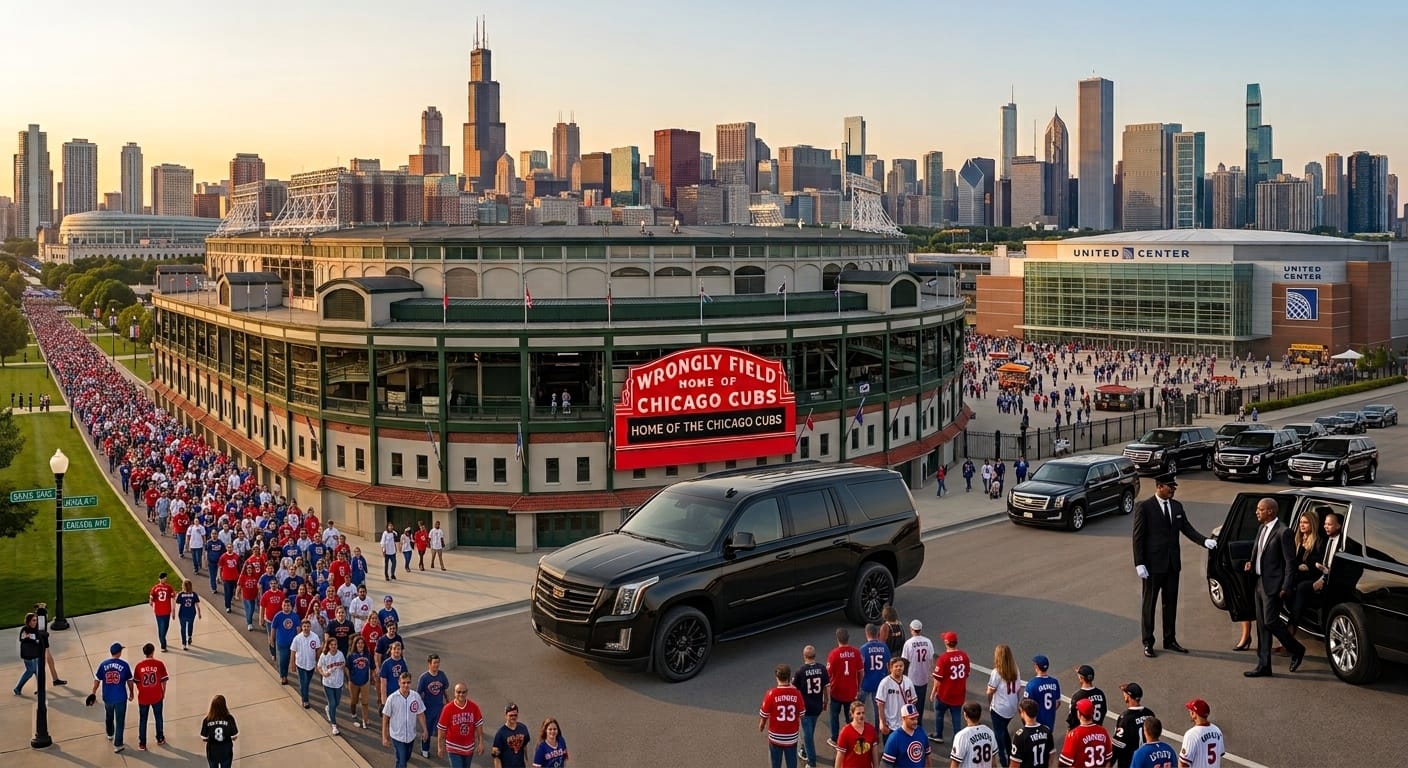
Wrigley Field is a different animal entirely. It’s not surrounded by dedicated stadium lots the way United Center is — it’s embedded in a dense residential neighborhood with narrow streets, heavy foot traffic, and a permit-parking zone that activates on game days. Parking here fills up fast and gets pricier the closer you get to the stadium, and the Clark and Addison intersection is known for gridlocking for a solid 45 minutes to an hour after the last out.
Game day realities at Wrigley:
- Street parking outside the residential permit zone fills early. For a weekend day game, expect nearby blocks to be full a couple of hours before first pitch.
- The Red Line’s Addison stop is a few minutes’ walk and, according to locals, clears out noticeably faster after the game than the surrounding streets do.
- If you do drive, the smarter exit routes tend to be north on Halsted or west on Waveland, avoiding the worst of the Clark and Addison bottleneck rather than trying to push straight through it.
- Night games and weekend games draw bigger crowds than weekday day games, so plan extra buffer time accordingly.
Soldier Field: Museum Campus
Soldier Field sits down on the Museum Campus along the lakefront, which is scenic right up until you realize how few roads actually lead in and out. Access points are limited by design, and when a Bears game overlaps with another lakefront event, traffic builds fast and tends to linger well past kickoff. Parking here is also generally the most expensive of the three venues, often reaching into the $75 range for lots close to the stadium.
What tends to catch people off guard at Soldier Field:
- The limited number of access roads means that even a well-timed arrival can turn into a slow crawl if traffic is already backed up on Lake Shore Drive.
- Post-game exit can take nearly as long as the drive in, especially after night games or a game that runs long.
- Because the Museum Campus also hosts other major events, it’s worth checking what else might be happening nearby on your game day before you finalize a route.
Why Game Day Transportation Is Its Own Category
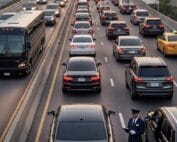
A 20-minute drive on a normal Tuesday can stretch into 45 minutes or more once you factor in game-day traffic, parking fees stacking up over a season, and post-game delays that hit just as hard as the trip in. If you’re going with a group, there’s also the coordination problem: splitting into multiple cars usually means staggered arrivals and delays trying to regroup afterward.
This is exactly the situation where rideshare pricing tends to work against you rather than for you. Demand spikes the moment a game lets out, and the size of that spike depends on how the game ended, how late it ran, and what else is happening in the city that night. A driver circling the block looking for a fare is a very different experience than a chauffeur who already knows the venue, already has a plan for the exit route, and is waiting exactly where you need them to be.
Planning a Smoother Game Day
A few habits make the biggest difference regardless of which venue you’re headed to:
Book ahead when you can. Whether it’s a prepaid parking pass or a scheduled ride, locking in your plan before game day removes a lot of the stress that comes from figuring things out at the last minute with a parking lot already half full.
Know your venue’s specific bottlenecks. United Center’s congestion is mostly expressway-driven. Wrigley’s is neighborhood-street-driven. Soldier Field’s is about limited access points along the lakefront. The right strategy looks different at each one.
Plan for the exit, not just the arrival. Getting to the game is usually the easy part. Getting out afterward, when tens of thousands of people are trying to do the same thing at the same time, is where a plan actually pays off.
Consider group coordination. If you’re going with more than one or two people, a single larger vehicle avoids the classic problem of multiple cars getting separated in traffic and everyone waiting around afterward trying to find each other.
For fans who’d rather skip the parking math and the post-game surge pricing entirely, a reliable Chicago limo service built around event travel can handle the venue-specific routing and timing so the group shows up together and leaves together, without anyone circling a lot looking for a spot.
When a Scheduled Ride Makes the Most Sense
Game day is one of the clearest cases where a pre-booked ride earns its cost back. Rideshare surge pricing after a sold-out game or a Bears game that runs into overtime can climb well past what a flat-rate ride would have cost, and that’s before factoring in the wait time standing on a crowded curb hoping a driver accepts the fare. A scheduled pickup and drop-off means someone else is handling the parking, the routing, and the timing, while your group focuses on the game.
That’s the appeal of booking Chicago black car service for events specifically — a flat rate agreed to before the game starts, a driver who already knows the venue’s access points and exit routes, and a pickup waiting at the curb instead of a fare you have to compete for the moment the final whistle blows. For groups attending multiple games over a season, or anyone who’s been burned by a $75 post-game surge fare once too often, it tends to be the more predictable and often more cost-effective option once everything is factored in.
Final Thoughts
Every Chicago venue has its own personality when it comes to game day logistics — United Center’s expressway squeeze, Wrigley’s neighborhood gridlock, Soldier Field’s limited lakefront access. None of them are impossible to navigate, but all three reward a bit of planning over showing up and hoping for the best.
Whether you’re driving yourself, taking the CTA, or booking a ride, the same principle holds across all three stadiums: know the venue’s specific bottleneck before you go, and have a plan for getting out that’s just as solid as your plan for getting in.